
The Long Game
How Donald Trump Became Moscow’s 'Useful Idiot'

Washington loves a neat story: heroes and villains, red ties and blue ties, the good guys and the bad guys. But the reality of power is always murkier, especially when it crosses borders, intelligence agencies, and bank accounts.
Since the end of the Cold War, no relationship has puzzled national security professionals more than the one between Donald Trump and the Russian Federation. Is the former president, now returned to the White House, a conscious agent of Russian intelligence? Or something subtler, and perhaps more dangerous: a man whose ego and vulnerabilities have been so carefully exploited over decades that he advances Moscow’s interests without needing to be told what to do?
The evidence points not to a Manchurian Candidate but to something Joseph Stalin once described in a meeting with his inner circle: a polyezny idiot, a useful idiot. The phrase captured Stalin’s delight at Western figures who, unwittingly or selfishly, advanced Soviet goals. The KGB’s heirs in today’s Russia understand this type perfectly. And Donald Trump may be the most successful example in American history.
The 1980s: Seeds of Influence
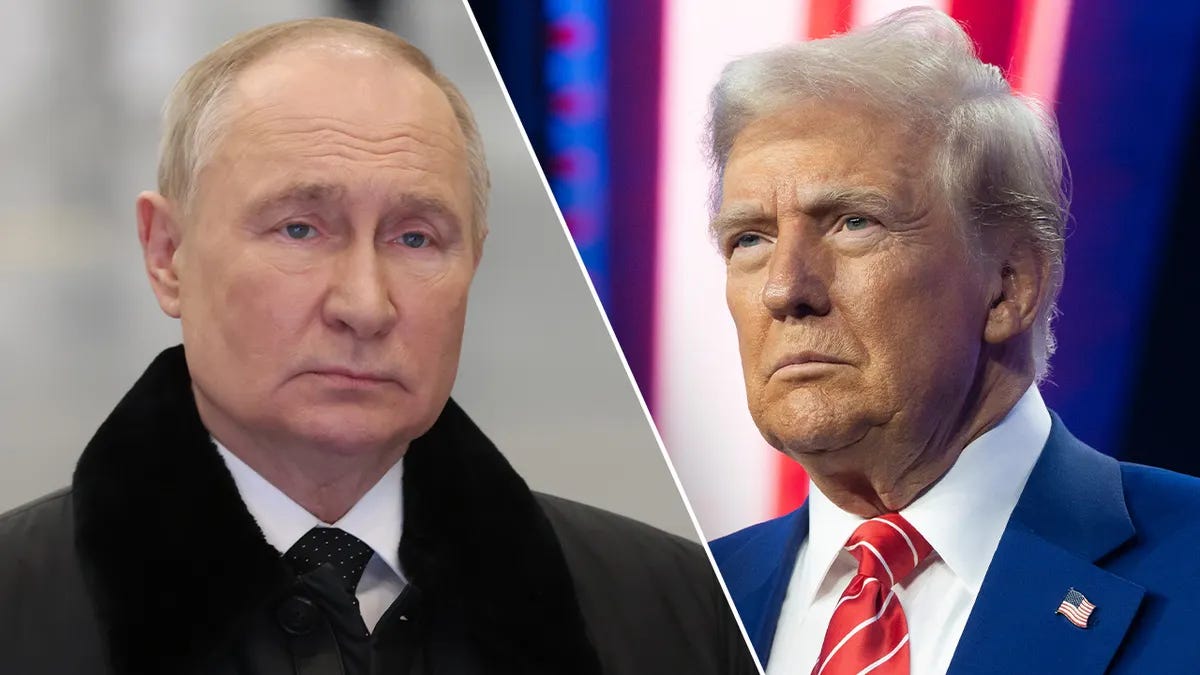
Trump’s ties to Russia didn’t begin with Vladimir Putin or social media memes. They started in the 1980s, when the Soviet Union was still intact. In 1984, David Bogatin, a Russian mobster later convicted of gasoline bootlegging, met with Trump at Trump Tower and purchased five condos on the spot. Federal prosecutors later seized those condos as part of a money-laundering case. At the time, the Russian mafia operated as an arm’s-length partner of Soviet intelligence, a murky ecosystem where criminal money and state objectives overlapped.
Three years later, in 1987, Trump took an all-expenses-paid trip to Moscow at the invitation of the Soviet ambassador to the U.S., Yuri Dubinin. Within weeks of returning, the then-political neophyte spent thousands on full-page newspaper ads calling NATO obsolete and demanding a retrenchment of U.S. security commitments abroad, a message that thrilled Moscow but baffled Washington.
Former KGB Major Yuri Shvets, stationed in Washington at the time, later described the trip as a classic cultivation operation. In his telling, the KGB saw in Trump a perfect target: narcissistic, cash-strapped, eager for flattery, and open to business deals. They didn’t need him to spy. They needed him to be receptive to their worldview and to amplify it.
The Money Problem
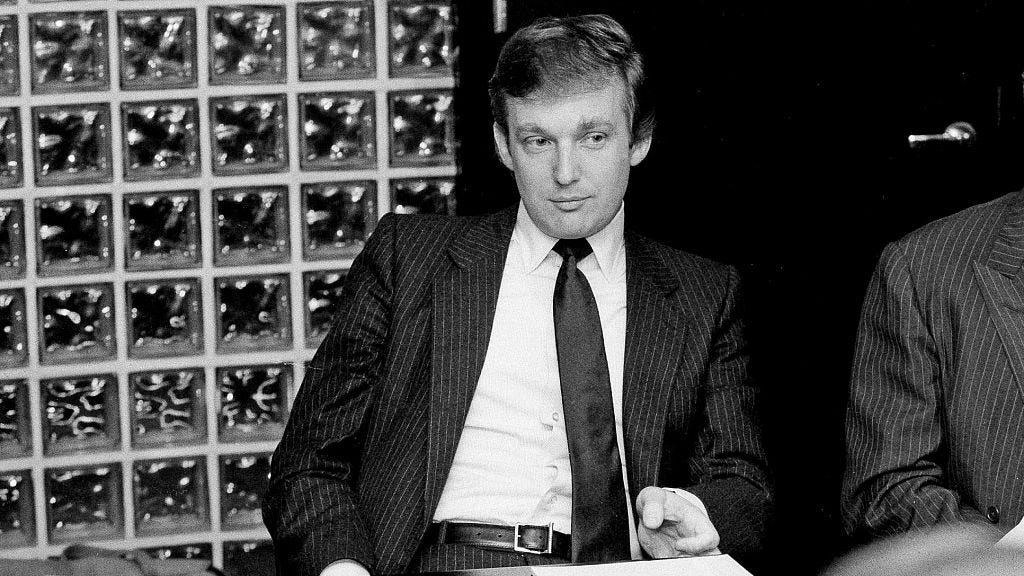
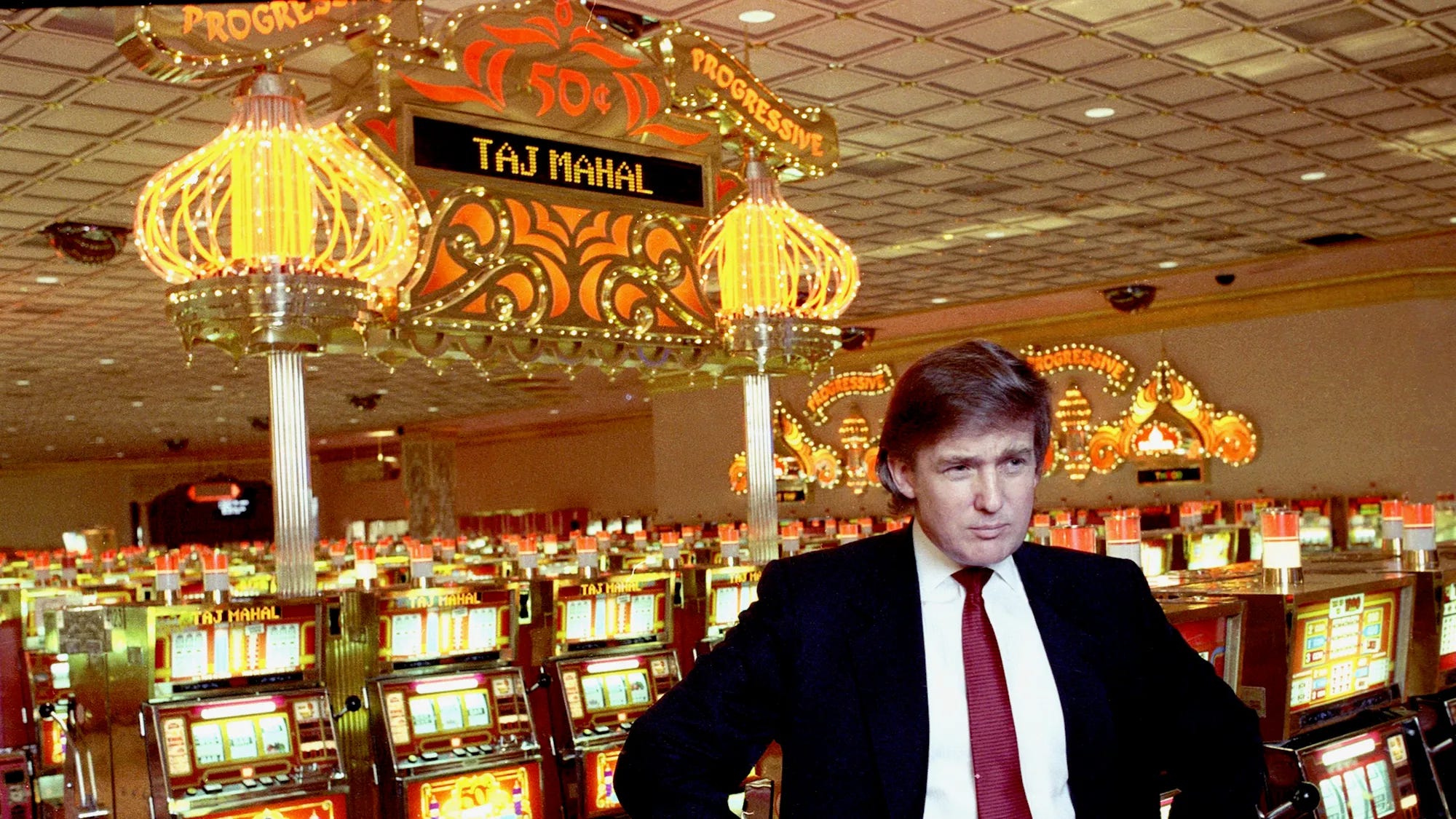
Fast forward to the 90s. Trump’s casinos were collapsing under debt. U.S. banks wouldn’t touch him. But foreign money, much of it from former Soviet republics, began flowing in. Bayrock Group, headquartered on the 24th floor of Trump Tower, was led by Tevfik Arif, a Kazakhstan-born former Soviet official, and Felix Sater, a Russian-born businessman and convicted stock fraudster with FBI ties. Bayrock partnered with Trump to finance projects he otherwise couldn’t afford.
Semion Mogilevich, the Russian mob boss sometimes called the Brainy Don, was under U.S. sanctions for money laundering, weapons trafficking, and links to intelligence operations. His operatives were a constant presence in the luxury real estate markets where Trump’s name was for sale. None of this proves that Trump knowingly laundered money for Russian interests. However, it reveals that his business’s survival was closely tied to networks that also served as conduits for Russian state influence.
Influence Without Orders
In intelligence work, there’s a difference between an agent and an asset. An agent receives instructions. An asset is used, sometimes unknowingly, as a conduit for influence.
What Trump’s pattern reveals is a man who has consistently adopted positions favourable to Moscow without needing a handler. As the 45th president, he called NATO obsolete, tried to extort Ukraine for political dirt, withdrew U.S. forces from Syria (leaving Russia dominant), and picked fights with Canada and Europe while cozying up to strongmen. Even now, in his second term, he has repeatedly threatened to abandon NATO allies while praising Putin’s strength, and repeatedly flip-flopping from questioning U.S. support for Kyiv, to most recently implying approval for unconditional use of all US-sourced armaments.
None of these actions requires secret orders from the Kremlin. They merely need a president whose instincts, grievances, and financial history align neatly with Moscow’s objectives. As Shvets told author Craig Unger in American Kompromat,
“We had a saying in the KGB: the best agent is the one who does not know he is an agent.” - Yuri Shvets in American Kompromat,
Mussayev’s Bombshell
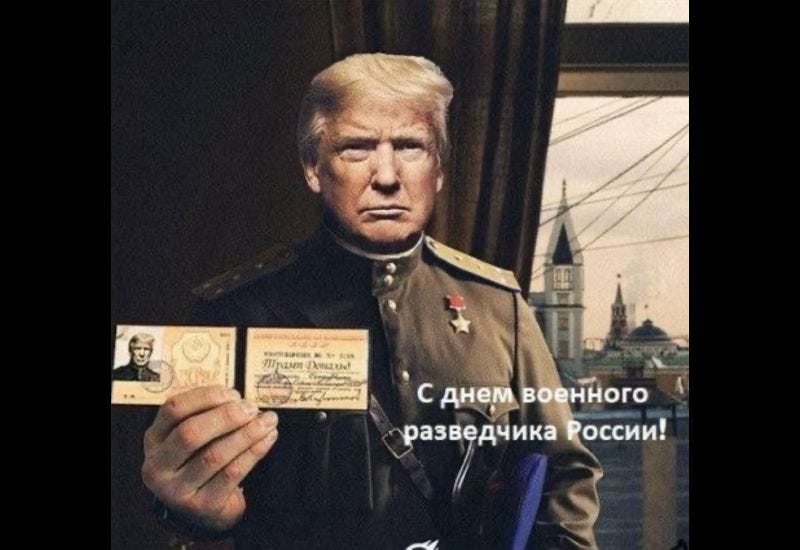
In February 2025, former Kazakh security chief Alnur Mussayev reignited the controversy by claiming Trump was recruited by the KGB under the codename Krasnov in 1987. Mussayev provided no documents to back up his claim, and fact-checkers from Euronews to Snopes have labeled it unverified. His biography contains contradictions; his timeline in the KGB is unclear.
Yet Mussayev’s story matters because it mirrors what Shvets and other defectors have long said: that the Soviets identified Trump as a potential asset decades ago. Whether Mussayev’s details are accurate or embellished, the pattern of cultivation is consistent.
Kompromat by a Thousand Cuts
Part of Russia’s genius is to build webs, not chains. Instead of issuing orders, it offers loans, licensing deals, flattery, and opaque partnerships. It cultivates debts and vulnerabilities. It creates a world in which the asset’s self-interest and the state’s interest converge so completely that no instructions are necessary.
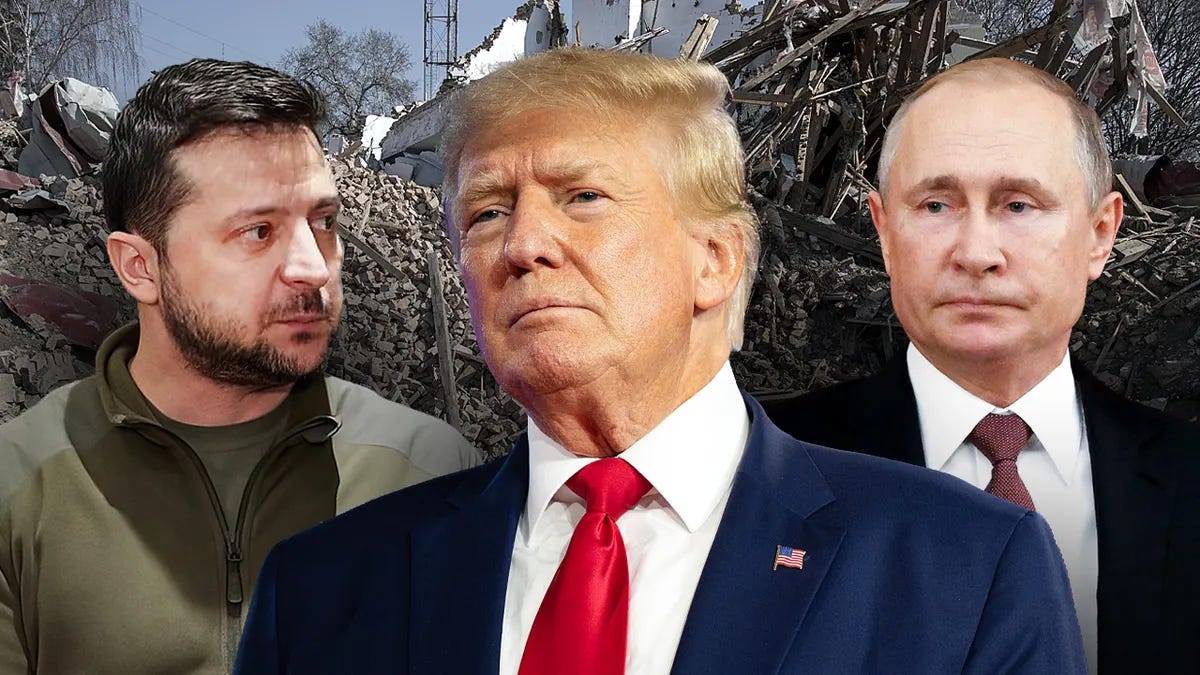
Trump’s decades-long entanglement with Russian money and admiration for strongmen created precisely that world. When he praises Putin, questions NATO, or undercuts Ukraine, it’s unclear whether he’s doing Moscow’s bidding or simply following his own instincts. From an intelligence perspective, the difference hardly matters.
The Slow Coup
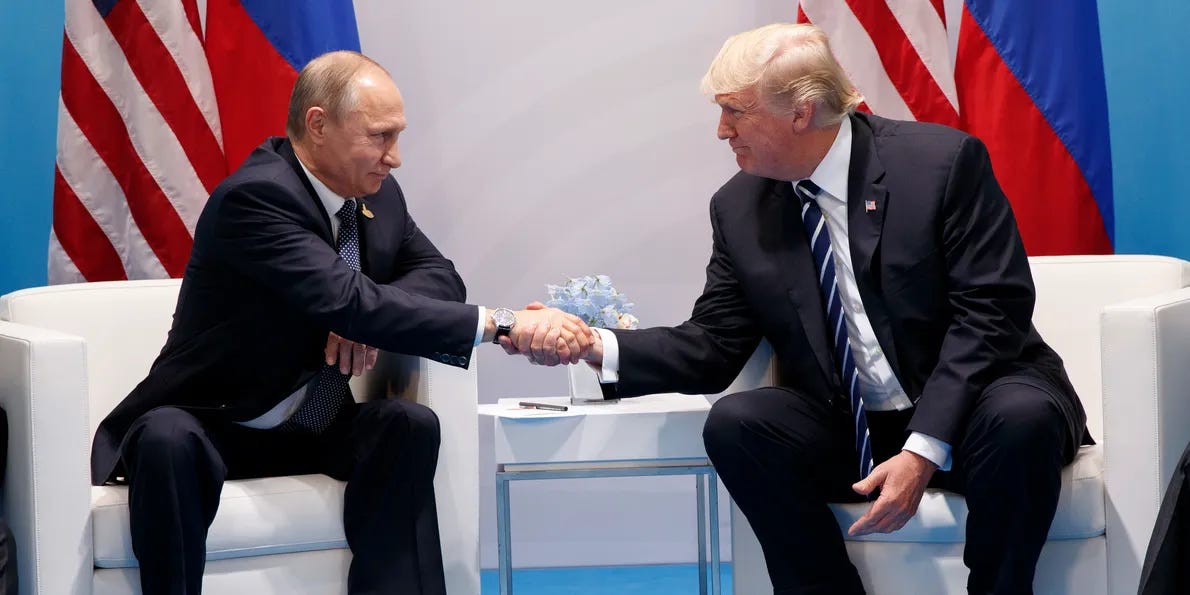
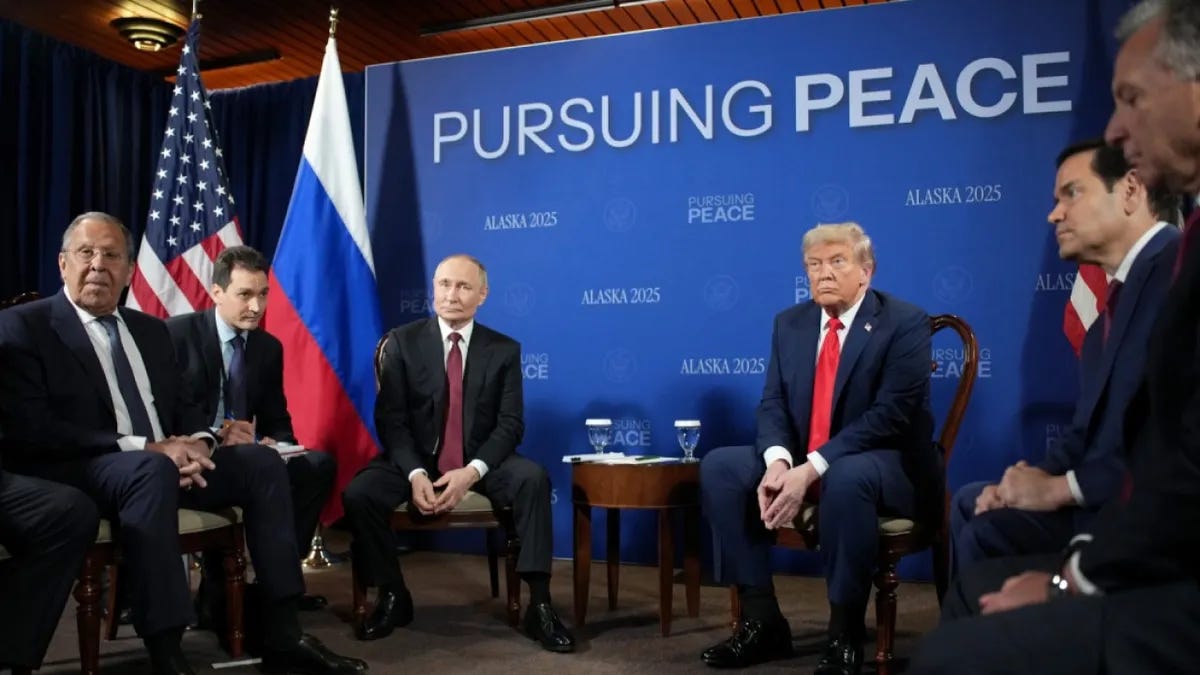
The result is a kind of slow-motion subversion. Trump’s first term weakened alliances, emboldened Russia, and sowed division within the United States. His second term, already marked by sharper attacks on NATO and renewed outreach to Putin, including the recent near-kowtowing ‘summit’ in Alaska, threatens to cement those gains.
This isn’t the Red Dawn of Hollywood fantasy. There are no tanks rolling down Pennsylvania Avenue. Instead, there’s a steady erosion of democratic norms, a numbing of public outrage, and the normalisation of behaviour that once would have ended a political career. As scandals pile up, including Russia, Ukraine, classified documents, pardons, Epstein, and government shutdowns, the sheer volume dulls the senses. Trump survives not because he’s innocent but because he’s overwhelmed the system’s capacity to respond.
A Useful Idiot, Not a Master Spy
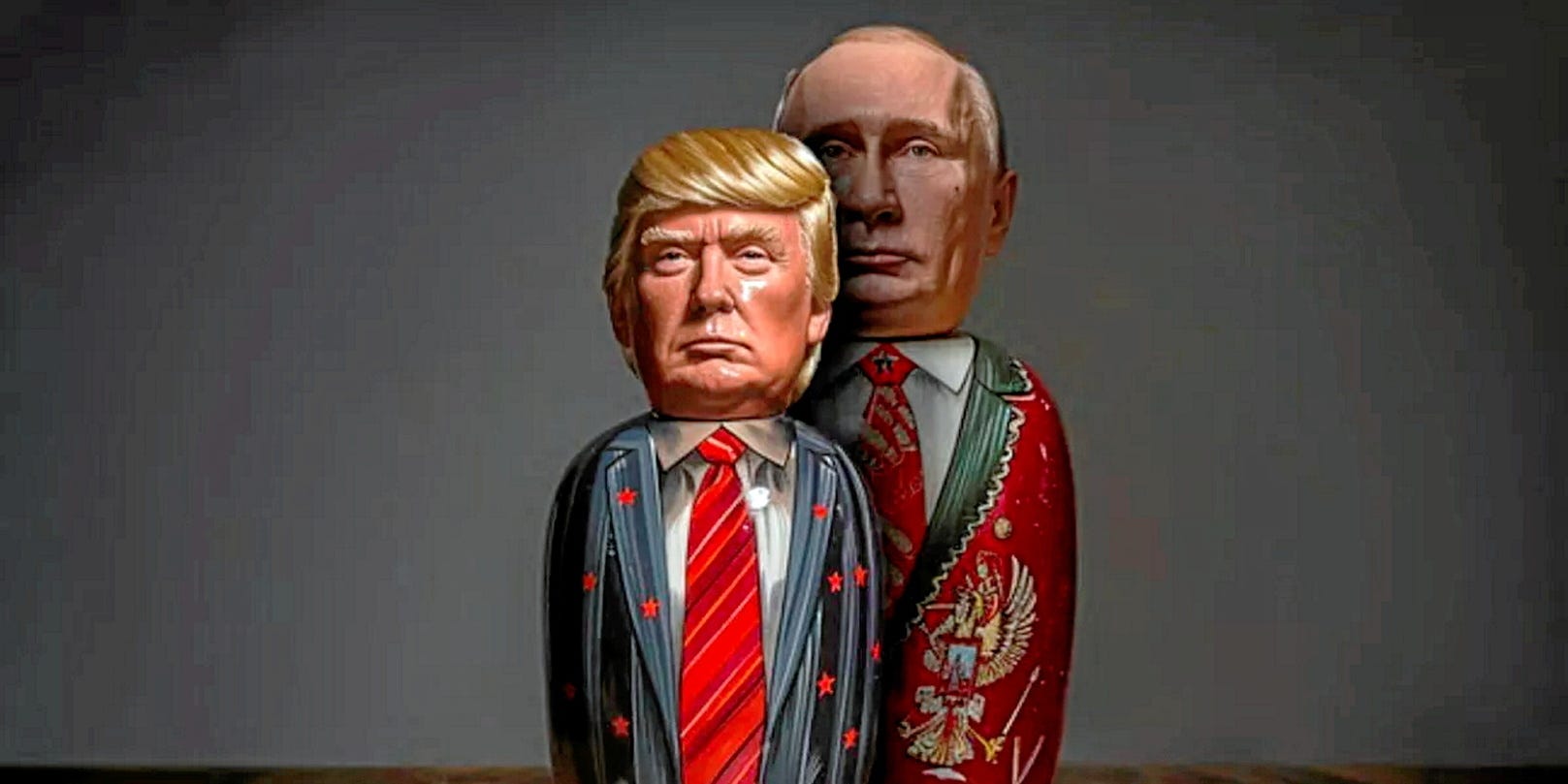
In the end, the simplest explanation is the one Stalin would recognise. Donald Trump is not a James Bond villain. He is a useful idiot: a man whose vanity, greed, and resentments made him susceptible to a foreign power’s long game. He doesn’t need to be a conscious FSB agent to be the most effective asset Moscow has ever had in Washington.
This distinction matters. Calling Trump a spy invites a debate over proof and codes and smoking guns, evidence of that, so far, doesn’t exist. But calling him a useful idiot fits the evidence we do have: the money, the cultivation, the behaviour, the outcomes. It frames the danger not as a lurid conspiracy but as a slow, deliberate corrosion of American sovereignty carried out in plain sight.
What Now?
Journalists need to keep digging. Mussayev’s claims should be investigated, not dismissed. Financial records, declassified intelligence, and testimony from defectors should be pursued with the urgency this story demands. Congress should examine how influence operations exploit financial distress and vanity. And the American public must resist the temptation to shrug. A tall order at present, given the apparent control that Trump has over the legislative majority that the GOP has become.
History will not remember whether Donald Trump technically carried an FSB case officer’s instructions. It will remember whether the United States recognised in time that its most powerful man was, wittingly or not, advancing the interests of a foreign adversary.
In 1962, the idea that a Soviet-backed figure could sit in the Oval Office would have sparked a national crisis. In 2025, it’s met with eye-rolls and partisan sniping. That complacency is itself a measure of how successful the operation has been.
The question isn’t whether Donald Trump is Agent Krasnov. The question is whether America can wake up to the reality of a useful idiot in the White House before the damage becomes irreversible.
Max Marten, an Australian-Latvian Author and political commentator, writes on politics, power, and hidden histories from just south of Adelaide, South Australia. His work blends investigative reporting with narrative nonfiction to expose how quiet patterns shape public life.